
Intent
At Signhills Infant Academy we use the resources from the Design and Technology Association to plan our Design and Technology Curriculum. These resources are developed around the concept that Design and Technology involves two important elements – learning about the designed and made world and how things work, and learning to design and make functional products for particular purposes and users.
Through our curriculum the children acquire and apply knowledge and understanding of materials and components mechanisms and control systems, structures, existing products, quality and health and safety. Through all of these elements of the curriculum they develop their technical knowledge.
We also believe that the skills that children learn in Design and Technology lessons have an impact on learning across the wider curriculum. The children acquire a broad range of subject knowledge and also draw upon other subject disciplines such as mathematics, science, engineering, computing and art and design. They also use the knowledge that they gain from the History curriculum when evaluating products from the past. They use the knowledge that they gain from the Geography curriculum when designing, making and evaluating products from or for other cultures.
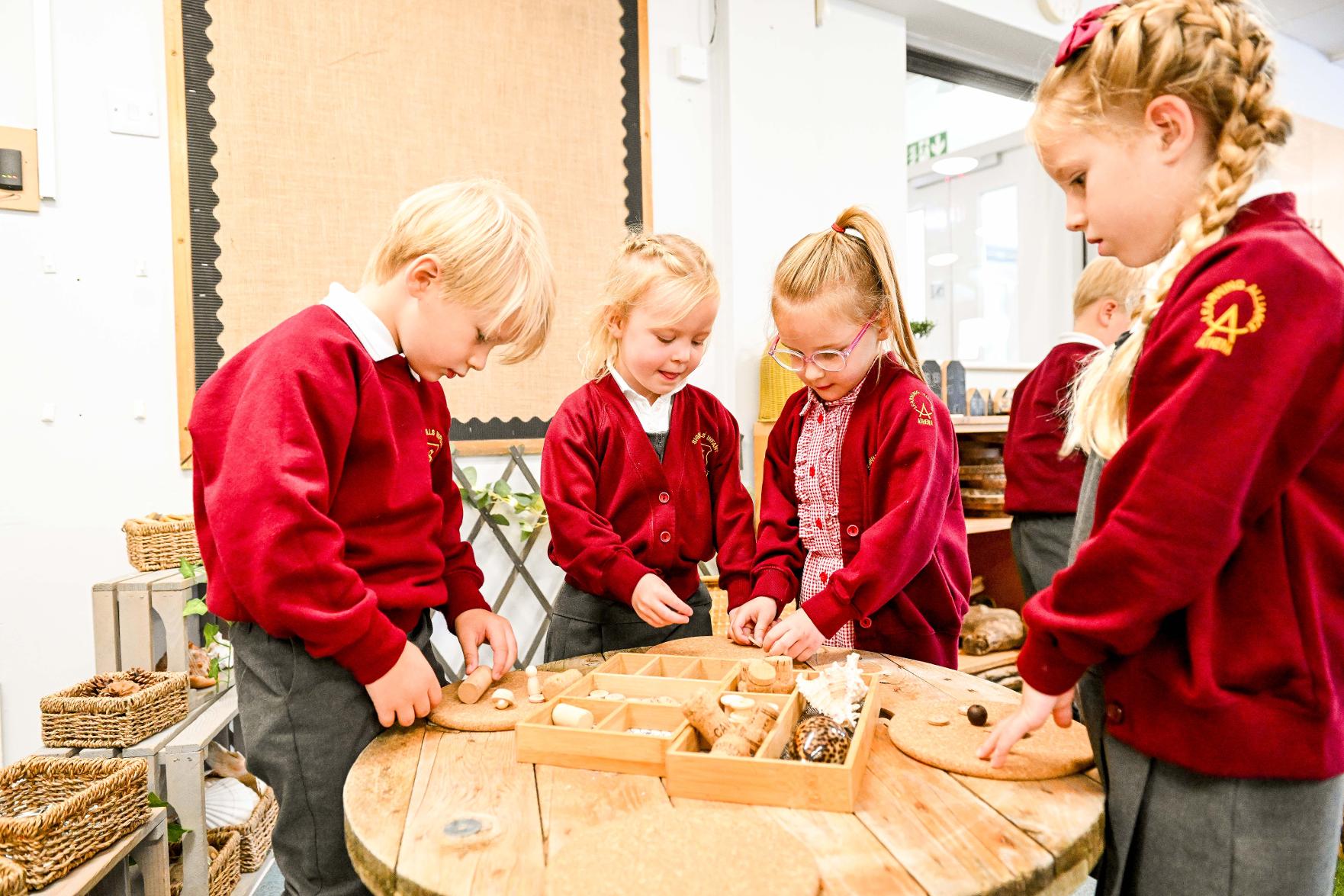
It is also our aim to develop other learning skills through collaborative working and problem solving. We expect our children to be creative and innovative and we encourage our children to consider carefully the important issues of sustainability and enterprise. We aim to raise the aspirations of our children, preparing them for whatever profession they may want to follow in the future.
Central to our Design and Technology curriculum are the concepts of creativity and imagination.
"You can't use up creativity. The more you use, the more you have." -- Maya Angelou, author, poet, civil rights activist
“High quality design and technology education makes an essential contribution to the creativity, culture, wealth and well-being of the nation” – The National Curriculum
We therefore use the Design and Technology Associations ‘projects’ as the basis for our curriculum. These involve the children taking part in creative and practical activities so that they are gaining the knowledge understanding and skills to engage with increasing independence in the process of designing and making. Whilst participating in these activities we want our children to feel safe to take creative risks so that they are working outside their comfort zone. We want them to learn from mistakes made and feel confident in making, changing and adapting design decisions.
"It's through mistakes that you actually can grow. You have to get bad in order to get good." -- Paula Scher, graphic designer and painter.
Implementation
Implementation
At Signhills Infant Academy we believe that Design and Technology has distinct disciplinary knowledge and a distinct disciplinary approach – pedagogy, despite its links with other subjects within the primary curriculum.
To ensure high standards of teaching and learning in Design and Technology, we implement a curriculum that is progressive throughout the whole school. Three Design and Technology projects are taught in each year in every year group. These projects are not directly linked to the topics that we teach in each term as we believe that it is more important to focus on what we need to teach to meet the aims of the Design and Technology programmes of study rather than creating tenuous links to a topic being driven by a high quality text.
The Design and Technology Association has developed a set of six interrelated Design and Technology principles. These principles describe the features of a true Design and Technology experience. Each principle is evident in each of the projects that the children undertake and this ensures that we capture the distinctive nature of Design and Technology within our lessons.
These principles are:
User: The children know who they are designing and making products for. They consider their needs, wants, values, interests and preferences. The intended users could be themselves, other people, an imaginary or story based character, a client, a consumer or a specific target group.
Purpose: The children can communicate the purpose of the products that they are designing and making. Each product is designed to perform one or more tasks. The children use their products in order to evaluate them e.g. tasting something that they have cooked.
Functionality: The children design and make products that work/function effectively in order to fulfil users’ needs, wants and purposes. It is not sufficient for the children to design and make aesthetically appealing products.
Design Decisions: The children have opportunities to make their own design decisions. This allows them to demonstrate their creative, technical and practical skills, becoming expert designers. They will use learning from other subjects as a part of this process. The children decide on what form their product will take, how their product will work, what task or tasks it will perform and who the product will be for.
Innovation: While the children are designing and making they need the chance to be original in their thinking. The projects that encourage innovation lead to a range of different design ideas and products being developed. These projects often have open ended starting points for learning.
Authenticity: The children design and make products that are believable, real and meaningful to themselves and others.
We have a long term plan in place for the teaching of Design and Technology. This plan ensures that enough Design and Technology is taught for children to make good progress and that all aspects of the programmes of study for KS1. The plan also makes sure that curriculum coverage is strong – we cover food, textiles, structures and mechanisms. We ensure that we teach at least one Design and Technology food project each year.

Impact
Our Design Technology Curriculum is high quality, well thought out and is planned to demonstrate progression. We focus on progression of knowledge and skills and discreet vocabulary progression also forms part of the units of work. We measure the impact of our curriculum through the following methods:
-
Assessing children’s understanding of topic linked vocabulary before and after the unit is taught.
-
Summative assessment of pupil discussions about their learning.
-
Images and videos of the children’s practical learning.
-
Interviewing the pupils about their learning (pupil voice).
-
Moderation staff meetings where pupils’ books are scrutinised and there is the opportunity for a dialogue between teachers to understand their class’s work.
-
Annual reporting of standards across the curriculum.
Examples of our designers’ work is also exhibited throughout the school, both on classroom and communal displays situated on our school corridors.

|
Progression of strands template (2) (1) | [docx 23KB] |

|

|
DT Long Term Plan | [pptx 379KB] |
|
|
|
Summer term knowledge organisers | [pptx 845KB] |
|
|
|
Spring term knowledge organiser | [pptx 763KB] |
|
|
|
Autumn term knowledge organisers | [pptx 912KB] |
|