Intent
At Signhills Infant Academy we are ‘Busy Bee-ing Our Best’, preparing children for the opportunities and challenges of life. Our children are living in a world surrounded by devices, and technology is changing the lives of everyone. Through teaching computing we equip our children to participate in a rapidly changing world where work and leisure activities are increasingly transformed by technology. We recognise that technology they will use when they leave school probably hasn’t been invented yet!
Our curriculum is balanced with computing skills to allow our children to become confident, creative and inquisitive learners who are able to be critical and challenge themselves. We want our pupils to be creators, not consumers and we understand and promote the accessibility opportunities technology can provide for all our pupils.
We want our pupils to be able to thrive as digital citizens, who are confident and competent using a range of technology positively, responsibly and safely.
We want them to understand that there is always a choice with using technology and we utilise technology (including social media) to model positive use. We recognise that the best prevention for a lot of issues we currently see with technology and social media is through education.
At Signhills Infant Academy, we encourage staff to try and embed computing across the whole curriculum to make learning creative and accessible and encourage pupils to use technology to share their learning in creative ways.
Through the study of computing, children will be able to develop a wide range of fundamental skills, knowledge and understanding that will prepare them for KS2 and equip them for the rest of their lives. Children must be taught in the art form of ‘Computational Thinking’ in order to provide them with essential knowledge that will enable them to participate effectively and safely in the digital world beyond our gate.


Implementation
At Signhills Infant Academy, computing is taught throughout the school, following our the Teach Computing curriculum. Our curriculum, which is spiral progressive is taught through 6 half term units of work.
Unit 1: Computing Networks and Systems
Unit 2: Creating Media
Unit 3: Programming A
Unit 4: Data and Information
Unit 5: Creating media
Unit 6: Programming B
A learning graph is provided for each unit that demonstrates progression through concepts and skills.
Alongside this, our computing curriculum recognises that computing is able to be taught both as a discrete subject as well as being woven through other areas of the curriculum. Many of the skills are transferable which provides a wealth of learning opportunities across the curriculum subjects including Art, D&T, Maths, Geography, Science and English.
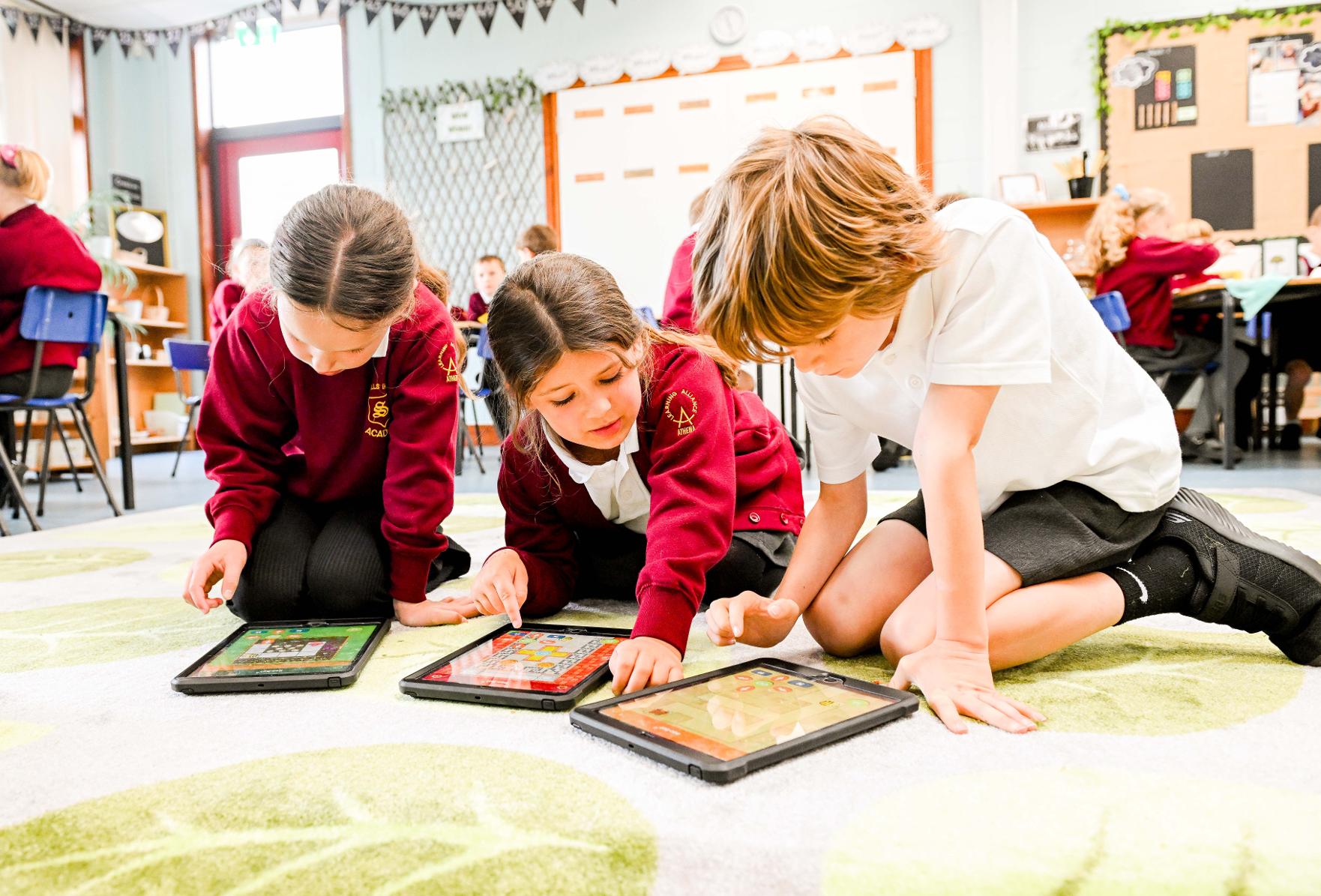
In EYFS, computing is taught through the Early Years Curriculum as part of ‘Understanding the World’ and is done through adult directed teaching as well as being part of the enhanced and continuous provision. All children are encouraged to select and use technology for particular purposes. They have access to Chromebooks, iPads and Bee-Bots at all times. All children learn how to use an iPad and are encouraged to use the iPads effectively and for a clear purpose, for example using the timer or taking photographs. They learn to give clear instructions to each other orally before tinkering with the Bee-Bots and beginning to program simple algorithms. The children will recognise that technology is used in school and at home through discussions and when they go on an ICT spotting walks.
When children enter KS1, our teaching implements the computing National Curriculum which is comprised of 3 main parts;
-
Information Technology
-
Computer Science
-
Digital Literacy
Pupils are taught to:
-
Understand what algorithms are; how they are implemented as programs on digital devices; and those programs execute by following precise and unambiguous instructions (Computer Science)
-
Create and debug simple programs (Computer Science)
-
Use logical reasoning to predict the behaviour of simple programs (Computer Science)
-
Use technology purposefully to create, organise, store, manipulate and retrieve digital content (Information Technology)
-
Recognise common uses of information technology beyond school (Information Technology)
-
Use technology safely and respectfully, keeping personal information private; identify where to go for help and support when they have concerns about content or contact on the internet or other online technologies. (Digital Literacy)
Computing is taught once a week discretely and as regularly as possible in support of other areas of learning across school. Knowledge and skills are taught progressively, allowing the children to embed their learning over time.
We teach E-Safety as an explicit part of our curriculum through Computing and PSHE lessons. Children are taught how to keep safe in this ever-changing digital world and the steps to take if problems or worries arise. We discuss issues such as; keeping personal information private, trusting people and sources online, treating others online as we would in real life, posting private information online, what to do if anything makes children feel uncomfortable online and finding out about our digital footprints. This is done through the units in the Teach Computing curriculum but also through the use of the National Online Safety resources to further educate and enhance the knowledge, understanding and skills that the children should have the opportunity to develop within the Education for a Connected World framework.
We use stories such as Smartie the Penguin, Jessie & Friends, Chicken Clicking and Lee & Kim’s Adventure cartoons to reinforce E-Safety throughout the year, as well as highlighting and discussing key events such as Safer Internet Day, Anti Bullying week and Children’s Mental Health week within the whole school.
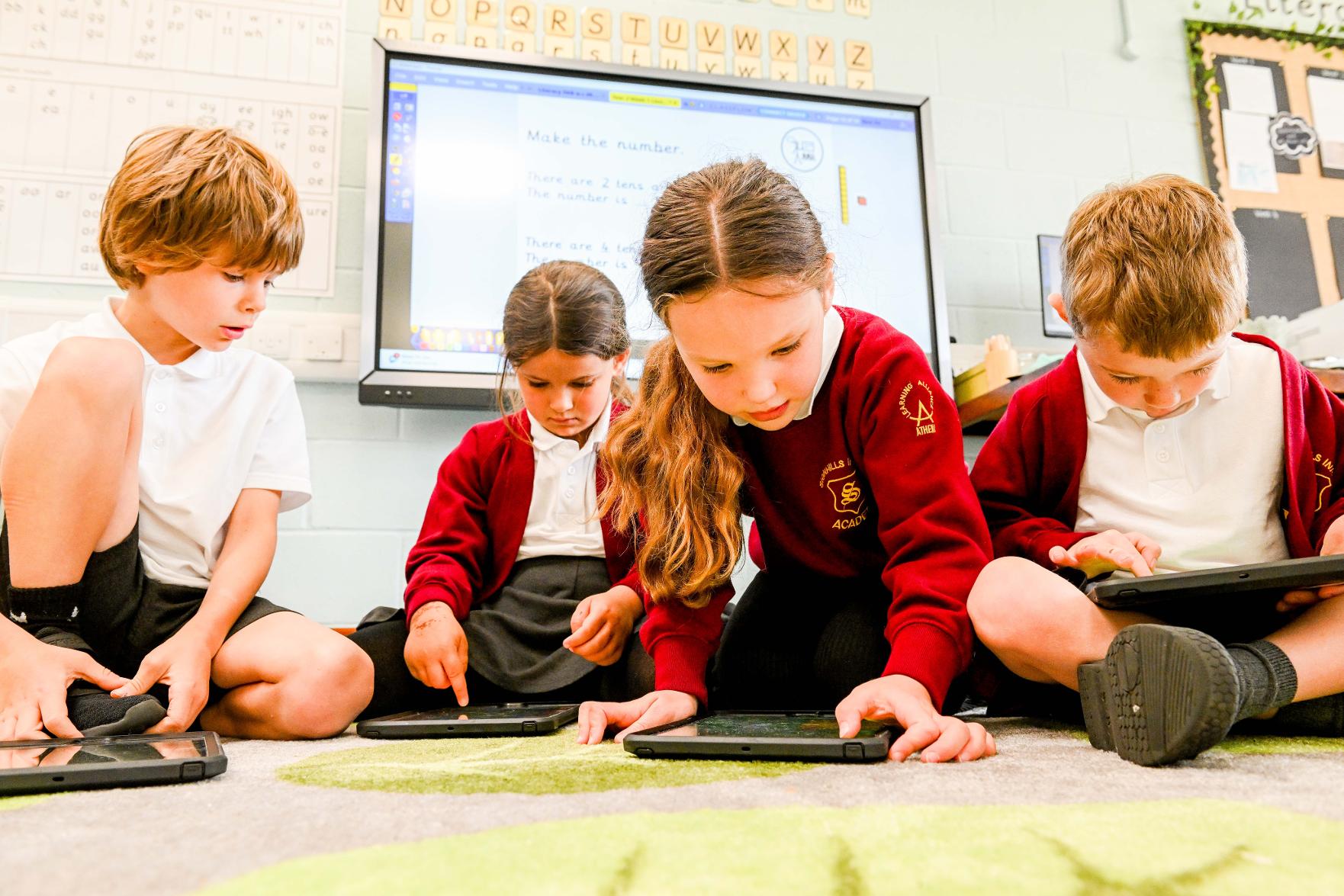
All of our children have access to a bank of Chromebooks and iPads to support their learning and there are interactive whiteboards in every classroom that are used daily to further enable and enhance learning.
Parents are also encouraged to send observations of their children using, recognising and talking about technology via Tapestry, an Online Learning Journal.
Each term, an ‘App of the Term’ is introduced within each year group and displayed within each classroom. The children are shown how to use this app and teachers are encouraged to plan creative ways in which this can be used within their lessons to enhance the children’s learning. Parents are also made aware of this on year group newsletters and are encouraged to download these on their devices at home for the children to experiment and be creative with.
To ensure that we make Computing an engaging and challenging learning experience we:
-
Keep up to date with the technological changes that go on in the world.
-
Recognise that all classes have pupils with widely differing ICT abilities. This is especially true when some pupils have access to ICT equipment at home, while others do not.
-
We provide suitable learning opportunities for all pupils by matching the challenge of the task to the ability and experience of the pupil.
This is achieved in a variety of ways, by:
-
Setting common tasks which are open-ended and can have a variety of responses.
-
Setting tasks of increasing difficulty (not all pupils complete all tasks).
-
Giving pupils the opportunity to use a variety of hardware and programmes/apps.
-
Having a clear overview of the curriculum within each year, showing the sequence of learning.
Impact
After the implementation of the Computing curriculum, children at Signhills Infant Academy will be digitally literate and ready to continue and build on their digital knowledge within KS2 before joining the rest of the world on its digital platform. They will be equipped, not only with the skills and knowledge to use technology effectively and for their own benefit, but more importantly – safely. The biggest impact we want on our children is that they understand the consequences of using the Internet and that they are also aware of how to keep themselves safe online.
We encourage our children to enjoy and value the curriculum we deliver. We will constantly ask the WHY behind their learning and not just the HOW. We want learners to discuss, reflect and appreciate the impact computing has on their learning, development and well-being. Finding the right balance with technology is key to an effective education and a healthy life-style.
The way pupils showcase, share, celebrate and publish their work will best show the impact of our curriculum. We also look for evidence through reviewing pupil’s knowledge and skills digitally through tools like Tapestry and observing learning regularly. Progress of our computing curriculum is demonstrated through outcomes and the record of coverage in the process of achieving these outcomes.
If you were to walk into computing lessons at Signhills Infant Academy, you would see:
-
Proficient users of technology who are able to work both independently and collaboratively.
-
Children using computational thinking.
-
Computing hardware and software being utilised to enhance the learning outcomes of our children, across the curriculum.
-
Clear progression in technical skills.
-
A learning buzz as children engage in their computing learning.

|
Progression of strands Computing 24-25 | [docx 37KB] |

|

|
Big Ideas Computing 24-25 | [pptx 259KB] |
|
|
|
Knowledge Organsier Y2 | [pptx 396KB] |
|
|
|
Knowledge Organsier Y1 | [pptx 589KB] |
|
|
|
Knowledge Organsier EYFS | [pptx 336KB] |
|